
This Jordanian city, known as the City of Mosaics, preserves the oldest surviving map of the Holy Land, laid into the floor of a Byzantine church over 1,400 years ago.
Why Visit Madaba
The Madaba Map, a vast 6th century Byzantine mosaic floor in St. George’s Church, depicts Jerusalem and the surrounding Holy Land in remarkable detail, serving as the oldest known cartographic representation of the region. Madaba’s streets and churches contain dozens of additional mosaics, most now preserved and displayed at the Madaba Archaeological Park and Museum. The city’s proximity to Mount Nebo, where Moses is said to have viewed the Promised Land, makes it a natural stop for travelers exploring biblical history in Jordan.
Top-Rated Madaba Tours & Experiences


Top Experiences
- Madaba Map: A 6th century Byzantine mosaic depicting Jerusalem and the Holy Land, the oldest known map of the region.
- Madaba Archaeological Park: A complex preserving mosaic floors and ruins from Madaba’s Byzantine and Roman past.
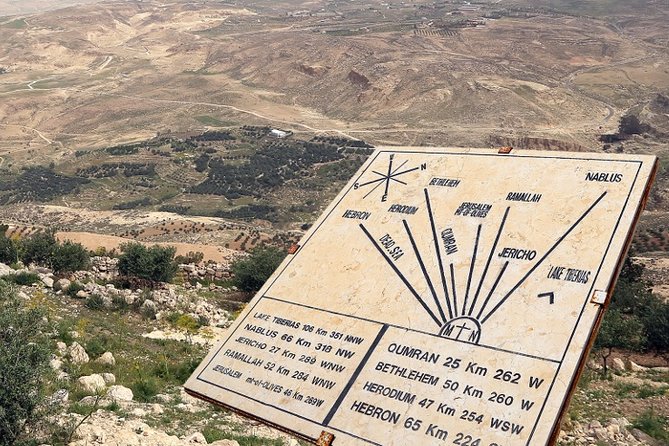
- Mount Nebo: A nearby biblical site where Moses is said to have viewed the Promised Land, with sweeping views into the Jordan Valley.
- Madaba Mosaic Workshops: Visit local studios continuing the city’s centuries old mosaic making tradition.
Book these experiences and more through guided tours from Madaba.

Madaba & Mount Nebo Half-Day Private Tour from The Dead Sea


Private Airport Transfer from/to Queen Alia Airport and Dead Sea

Practical Tips
- Madaba is easily combined with Mount Nebo and the Dead Sea as a day trip from Amman.
- St. George’s Church remains an active place of worship, dress and behave respectfully during visits.
- The city’s mosaic tradition continues today, with several workshops offering demonstrations and pieces for sale.
FAQ
What is the Madaba Map?
It is a 6th century Byzantine floor mosaic in St. George’s Church depicting Jerusalem and the surrounding Holy Land, considered the oldest surviving map of the region.
Is Madaba worth visiting from Amman?
Yes, it is about 30 minutes from Amman and pairs well with nearby Mount Nebo and the Dead Sea for a full day trip.
Why is Madaba called the City of Mosaics?
Its churches and archaeological sites contain an unusually dense concentration of Byzantine era mosaic floors, and the city maintains an active mosaic making tradition today.








Write Your Review
No reviews yet. Be the first to share your experience!