
Few buildings anywhere have lived as many lives as Hagia Sophia. Built as a Byzantine cathedral in the 6th century under Emperor Justinian, it was the largest interior space in the world for nearly a thousand years, converted into a mosque after the Ottoman conquest of Constantinople in 1453, turned into a secular museum in the 20th century, and reconverted to an active mosque in 2020. That layered history is written directly into its walls, where Christian mosaics and Islamic calligraphy medallions now share the same soaring space.
Related: Hagia Sophia Tickets & How to Visit (2026 Guide)
Top-Rated Hagia Sophia Tours & Tickets


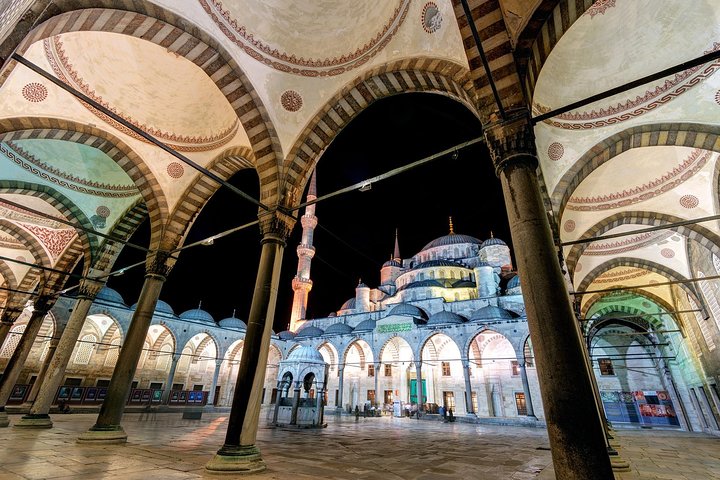


What to See Inside Hagia Sophia
Stand Beneath the Central Dome
Rising over 55 meters, the dome appears almost to float thanks to a ring of windows at its base, an engineering feat that stunned visitors for centuries and still does today. Looking straight up from the center of the nave is the single most photographed moment inside.
Find the Byzantine Mosaics
Several gold-ground mosaics survived centuries of Ottoman-era plastering and have since been uncovered, including the Deesis mosaic and images of emperors and empresses in the upper galleries. Their survival alongside Islamic calligraphy is a rare visual record of the building’s dual religious history.
See the Massive Islamic Calligraphy Medallions
Eight enormous circular panels bearing the names of Allah, Muhammad and early Islamic leaders hang from the upper walls, added during the Ottoman period and considered among the largest examples of Islamic calligraphy in the world. They dominate the upper reaches of the interior.
Visit the Weeping Column
A bronze-clad column with a worn hole is popularly believed to have healing properties, and visitors still line up to place a thumb in the hole and make a wish, a tradition dating back centuries. It’s a small but well-loved ritual stop inside the building.
Best Time to Visit
Early morning, right after opening, offers the best chance of a relatively uncrowded interior before tour groups arrive in force. Since Hagia Sophia functions as an active mosque, visiting outside of prayer times ensures full access to the main floor.
How to Get There
Hagia Sophia sits in the heart of Istanbul’s Sultanahmet district, directly across from the Blue Mosque and within easy walking distance of the Topkapi Palace and Grand Bazaar. The nearest tram stop is Sultanahmet, making it simple to reach from almost anywhere in the historic peninsula.
Good to Know
As an active place of worship, modest dress is required, meaning covered shoulders and knees for everyone, and women are asked to cover their hair before entering; head scarves and wraps are usually available near the entrance for those without one. Entry is free, but the main floor closes to sightseeing during the five daily prayer times, so building some flexibility into your schedule helps.
Hagia Sophia isn’t just a beautiful building; it’s a physical record of Istanbul’s entire layered identity, Byzantine and Ottoman, Christian and Islamic, standing in the same room at once. Few sites anywhere make that history so visible.









Write Your Review
No reviews yet. Be the first to share your experience!